

Creative Destruction
FM (Friday Morning) Reflection #41

When the news broke this week that three economists had won a Nobel Prize for their work on creative destruction, I’m willing to bet it barely made a ripple in many circles.
For me, it was a thunderclap in an ongoing storm of technology that constantly reshapes our lives, and it follows the AI lightning bolt that is now altering business landscapes.
Upon hearing the news, my mind went straight to two companies that shape our experiences in business and commerce, whether it’s visible to you or not.
Salesforce and Tableau. Their story—their separate ascents and their union—is a business case study for the ways that creative destruction works. These two companies were architects of distinct, yet equally potent, revolutions that reshaped their respective ecosystems.
In reflecting on their $15.7 billion merger in 2019, I believe it was half strategic master stroke and half master class on the challenges that come with a manufactured collision of two philosophies and two fiercely loyal communities.
And in retrospect, we can see the outlines of what we will need to care for as we move into an agentic future.
Order in the System, Freedom for the Analyst
To understand the tension, it helps to appreciate the different kinds of order each company brought to the world. Salesforce, born from Marc Benioff’s crusade for “The End of Software,” created an extensible CRM platform, with its promise to streamline and structure business processes using centrally-curated data and workflow tools.
Salesforce was a pioneer with the SaaS (software as a service) business model, and later, PaaS (platform as a service). Following Steve Jobs’ advice to build an ecosystem, Salesforce launched the AppExchange, transforming itself from a product into a platform—a walled garden where thousands of partners could build solutions on a common architecture. This was about serving the system to realize the centralized, orderly universe for customer data.
On the other side of the coin was Tableau. Born from academic research at Stanford, its mission was to “help people see and understand their data.” Its breakthrough, a visual query language called VizQL, created structure for human inquiry, creatively destroying the old IT-gatekeeper model of business intelligence. It liberated BI from the exclusive domain of IT departments, empowering a generation of non-technical users to ask and answer their own questions. Its ecosystem wasn’t a commercial app store, but a knowledge and talent marketplace that came together in local TUGs (Tableau User Groups) and the annual Tableau Conference (the data-rockstar-can’t-miss event of the year).
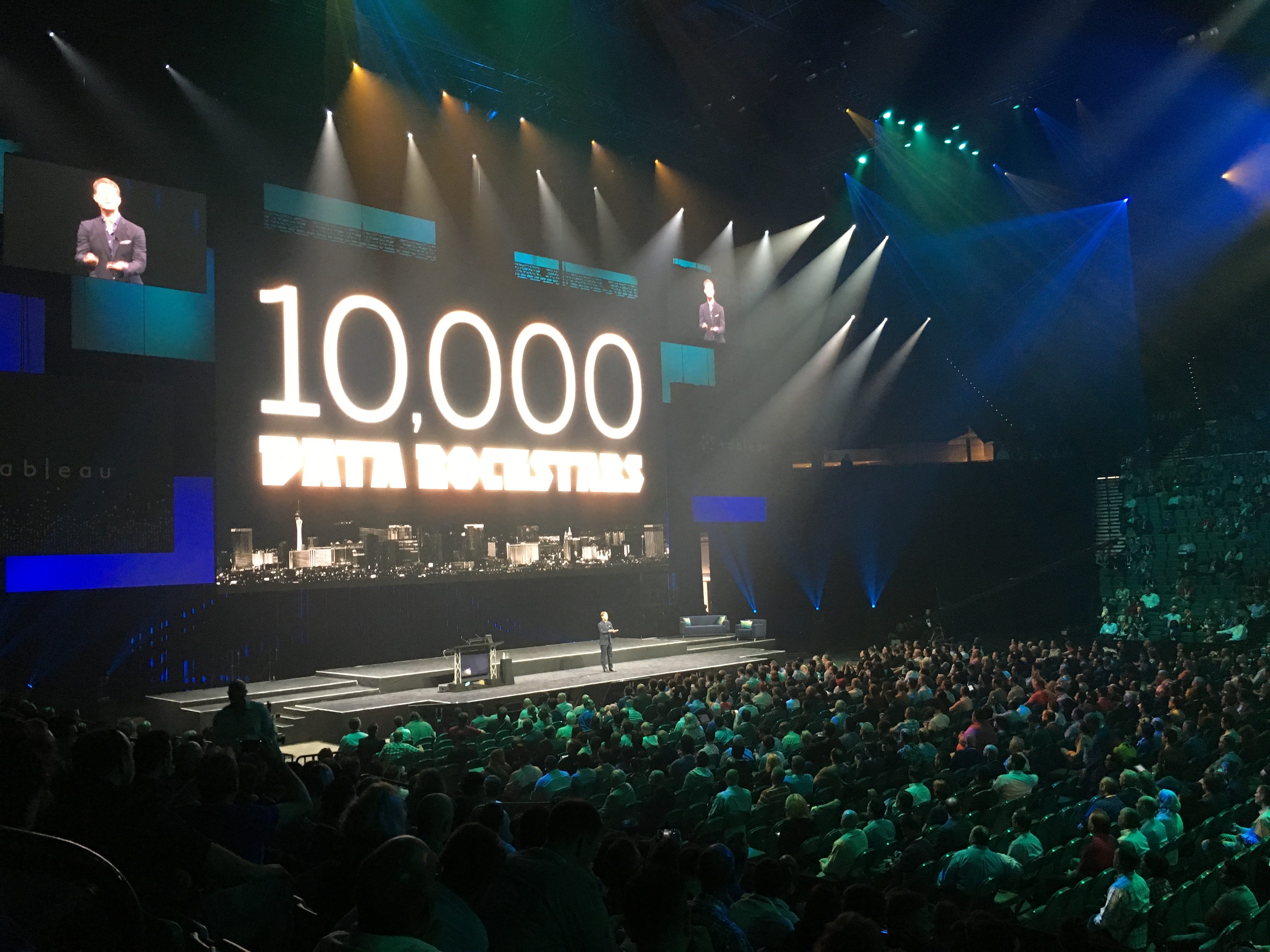
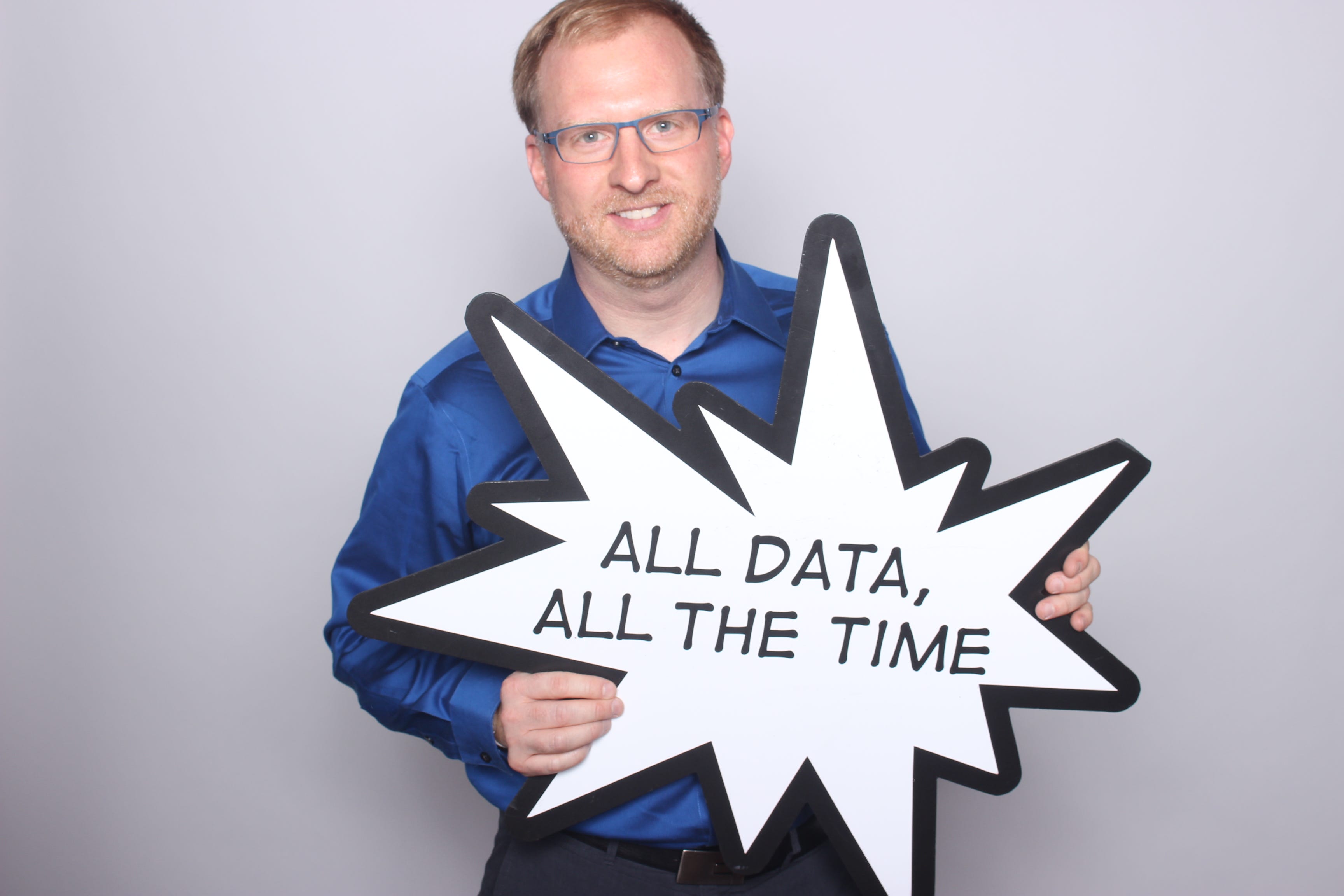
The community was extended through Tableau Public, its free platform that became the de facto portfolio for an entire profession and the engine of a passionate, grassroots community that proudly called itself the “DataFam.” One built a top-down empire; the other fueled a bottom-up movement. And it led to the decline of traditional reporting tools and products that were less flexible (Crystal Reports, anyone?).
An Uneasy Union and an Agentic Future
The strategic logic for the Salesforce acquisition was sound. Salesforce needed a best-in-class analytics layer to complete its “Customer 360” vision. But integrating a grassroots movement into a corporate empire is a messy business. While the merger has produced useful integrations, like embedding Tableau dashboards directly into Salesforce pages, the core Tableau product has, in the eyes of many long-time users, languished.
Complaints of sluggish performance and a dated UI have became more common, fueling a perception that development resources are being diverted to serve the new strategic master. This friction culminated in a 2023 “Irish wake for Tableau,” where past and current employees gathered to mourn what they saw as the death of the company’s unique culture at the hands of its new corporate parent.
The Essentialist in the Room
My lived experience with disruption includes direct involvement with both Tableau and Salesforce ecosystems. I was a business intelligence consultant for ten years, and I’ve lost count how many times we’d spend months building a complex, well-engineered data warehouse, paired with a set of thoughtfully designed dashboards, only for a business user to look at it for ten seconds and ask, “This is great, but how do I get the data into Excel?”
People have a fundamental need to get their hands on data and explore it for themselves.
Tableau understood this impulse. It provided the tools for analysts to transform themselves from geeks into superheroes, with the power to find patterns and tell stories that were previously locked away and hiding in data (I embrace the data geek label, btw.)
It spawned a new generation of BI professionals—people who finally had the tools to make sense of the world for their organizations. In 2012, this revolution felt so important that I co-created the first data visualization class at the University of Cincinnati, to teach these essential skills.
During my tenure as an adjunct professor, I remember having dinner with Stephen Few, one of the giants of the data visualization field, when he was visiting the university. I asked a question about his “minimalist” approach to design, and he quickly corrected me. Paraphrasing, he said, “It’s not minimalism. It’s essentialism.”
The distinction stuck with me: the goal of good data visualization is to find and present the essential story in the data — no more, no less.
This principle is at the heart of the craft of data visualization. And it’s something that we need to care for, as well as the art and skill of designing according to essentialist principles, as we move into the AI era.
Upping Your Impact by Serving the Story
The creative destruction of the current tech cycle will keep on coming. Natural language queries will undoubtedly erode the market for building dashboards, and as a byproduct, erode critical skills in the art and craft of data visualization.
But this is also a massive opportunity to elevate our skills from tool experts to strategic storytellers. The future belongs to those who can collect, organize, and curate data, and to the person who knows which story needs to be told, and why, and how to execute.
The value is shifting from technical proficiency to wisdom driven by experience.
So, what can we do to Do Good by Doing Better?
Study the Essentials. Learn the fundamentals. Pick up a book by an author like Stephen Few, Cole Nussbaumer Knaflic, Alberto Cairo, or my teaching buddy at UC Jeffrey Shaffer. Take an online course on information design. Understand what makes a visualization effective, regardless of the software used to create it.
Become a Teacher. As AI agents become our analytical partners, our role will shift to being their teachers. We must also teach the fundamentals of data and AI literacy to those around us. This means we first need to have a deep understanding of the principles ourselves. We must learn how to prompt for clarity, simplicity, and honesty in data representation, and then evangelize this to our communities.
Practice Your Craft. Find a dataset on a topic you care about—sports, local politics, a personal project—and practice telling a story with it. Share your work by posting it on Tableau Public, writing a blog post about your process, or creating a thread on a professional network. The act of creating, articulating your findings, and seeing how an audience responds to your story is the fastest way to build the wisdom and judgment that lie at the heart of essentialism.
Service Is The Way
Both Salesforce and Tableau were built on a philosophy of service. One served the operational needs of the organization, providing structure for technical teams and visibility for business leaders. The other served the intellectual curiosity of the individual, empowering the analyst to become a data storyteller.
The great design challenge of this next era is to synthesize two philosophies—to build AI systems that provide the reliable structure and answers an enterprise requires, while empowering the essential human quest for understanding that drives imagination and innovation.
The goal isn’t just to get a correct answer from an AI. The goal is to design an experience where the AI acts as a thoughtful partner with everyone. It should help the business leader instantly grasp the essential narrative of their enterprise, empower the data visualizer to craft a more compelling story faster, and enable the technical expert to see their well-structured data brought to life with integrity.
It’s about helping each of us better serve our own ultimate audience—be it a boardroom, a client, or a frontline team.
It’s about service all the way.
And that, really, is the whole point.